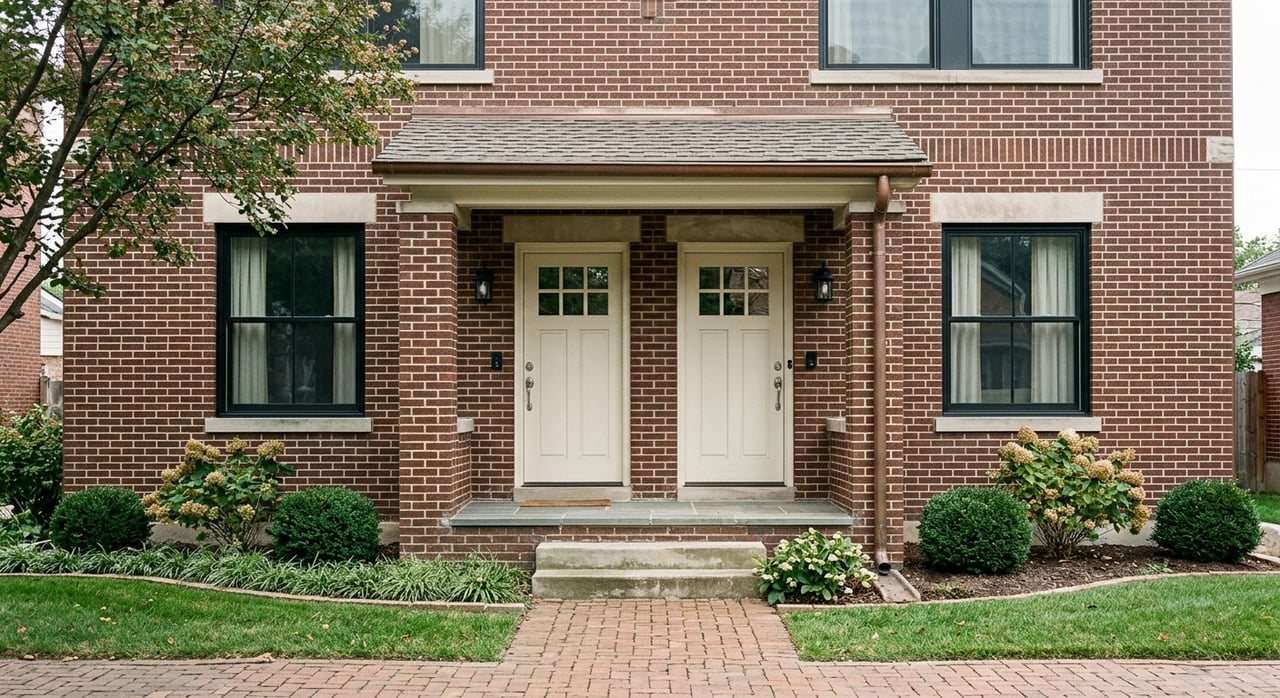
First-Time Investor Guide to Ewing’s Rental Property Market
May 28, 2026
May 28, 2026
Buying your first rental property in Ewing can feel exciting and a little intimidating at the same time. You want a market with real demand, manageable price points, and enough stability to support smart long-term decisions. This guide will help you understand what makes Ewing’s rental market worth a closer look, what numbers to watch, and where first-time investors need to be careful. Let’s dive in.
Ewing sits in a well-connected part of Mercer County. County planning materials describe the area as a crossroads for commerce, education, healthcare, and culture, with access tied to I-95/I-295, Route 1, Trenton Station, and Trenton-Mercer Airport.
That kind of connectivity matters when you are evaluating rental demand. A market with transportation access and major local anchors often attracts a mix of renters, from working households to people looking for housing near employment or higher education.
Ewing also benefits from two notable anchors called out by Mercer County: The College of New Jersey and Trenton-Mercer Airport. TCNJ supports an off-campus housing ecosystem in the area, which adds another layer of demand beyond traditional long-term renters.
Ewing is not a rental-only market, but it has a meaningful renter base. The township’s 2023 ACS-based housing profile shows 13,795 occupied housing units out of 14,804 total units, with 32.7% renter-occupied and 67.3% owner-occupied.
For a first-time investor, that mix can be a positive sign. It suggests you are buying in a community with a large ownership presence, while still having a substantial pool of renters.
Affordability is also part of the local picture. The township plan reports that 37.2% of renter households spend 35% or more of their income on rent, which shows that rent burden is a real issue in Ewing.
That does not automatically mean you should push your rent projections higher. In fact, it is a reminder to underwrite carefully and make sure your pricing matches what the market can realistically support.
If you are investing in Ewing for the first time, it helps to know what the local housing stock actually looks like. The township plan shows that single-family detached homes dominate, making up 59.9% of the housing stock.
That matters because your most realistic opportunities may be detached homes, attached homes, or the occasional small multifamily property. Ewing is not a market defined only by large apartment buildings.
Here is the local housing mix from the township plan:
For many first-time investors, that makes a small buy-and-hold strategy easier to picture. You may be looking at a detached home with strong rental appeal, or a duplex or small multifamily property when inventory allows.
One of the most important details in Ewing is the age of the housing stock. According to the township plan, 47.8% of structures were built between 1950 and 1970, and 12.8% were built in 1939 or earlier.
Older properties can still be solid investments, but they usually demand more planning. Repairs, replacements, and ongoing maintenance can affect your returns if you only focus on the purchase price and rent estimate.
As a first-time investor, it is smart to build in stronger reserves for:
This is one reason Ewing can reward patient investors who plan for the long run. It is less about chasing a fast win and more about buying with a realistic operating budget.
When you start analyzing deals, you may notice different value numbers from different sources. The safest takeaway from township and Census-based data is that the typical owner-occupied home value sits in the high-$200,000s.
That said, live market activity gives you a more current benchmark. Redfin reported a median sale price of $385,000 in March 2026, with homes spending a median of 41 days on market and receiving about 3 offers on average.
For an investor, those numbers help frame current acquisition conditions. You are not looking at a market where properties sit endlessly, but it is also not a market that automatically supports rushed decisions.
One of the biggest mistakes first-time investors make is relying on a single rent source. In Ewing, a better approach is to use a conservative baseline and then compare it with current asking-rent data.
HUD’s FY2026 Mercer County Fair Market Rents are a useful conservative benchmark for standard-quality units. Those figures are:
Because HUD fair market rents reflect 40th percentile gross rents, they are better used as a floor-like planning tool than a top-end assumption. They can help you avoid overestimating income.
Zillow’s May 2026 Ewing rental data shows a higher asking-rent picture, including an average rent of $2,400, with typical asking rents of $1,575 for one-bedrooms, $1,997 for two-bedrooms, $2,350 for three-bedrooms, and $3,644 for four-bedroom homes.
The difference between these sources is important. Asking rents can show current market ambition, while HUD figures give you a more conservative benchmark. The township’s ACS rent bands add one more reality check, showing that many occupied rentals fall into the $1,000 to $1,499 and $1,500 to $1,999 ranges.
A smart first-pass rent strategy is to:
Cash flow is about more than rent minus mortgage. In Ewing, several local expenses and compliance items deserve close attention before you make an offer.
Property taxes should be near the top of your list. New Jersey calculates tax bills using the local general tax rate and the property’s assessed value, and Ewing’s certified 2025 general tax rate is 4.051.
You should also account for sewer user fees when the property is connected to public sewer. That cost can easily be missed by new investors who focus only on taxes and insurance.
A practical Ewing underwriting checklist includes:
If you skip any of those items, the deal may look stronger on paper than it really is.
Ewing has a compliance process that first-time investors need to understand early. Rental dwellings must be registered by January 1 each year, and rental registration and fire forms are due by January 31.
The township also requires a property maintenance inspection when a tenant changes. In addition, dwellings or commercial buildings offered for resale must be inspected and approved by the Division of Housing.
These rules do not make Ewing a bad market. They simply mean you need a more organized, long-term approach.
When you combine the local operating rules with current market timing, Ewing looks better suited to patient investing than a rushed flip strategy. Redfin’s 41-day median market time suggests a market that still requires planning, and the township’s inspection and registration requirements add another layer of process.
For a first-time investor, that can actually be a benefit. A buy-and-hold plan gives you more room to absorb upfront costs, improve operations, and build equity over time.
It also aligns with the kinds of properties you are more likely to find in Ewing. Detached homes and small multifamily opportunities often work best when you focus on stable rental performance instead of a quick resale timeline.
Ewing’s renter demand is not driven by just one audience. The township’s median age of 37.1 and median household income of $87,125 point to a market that can appeal to working households and longer-term residents.
At the same time, TCNJ supports a nearby off-campus rental ecosystem. That does not mean every property should be treated as a student rental, but it does mean some homes may benefit from proximity to a college-related housing network.
For first-time investors, the key is to match the property to the likely renter profile. A detached home may attract one type of renter demand, while a smaller unit closer to local anchors may perform differently.
If you are considering your first Ewing rental purchase, try to keep your analysis simple and disciplined. You do not need a perfect spreadsheet on day one, but you do need a framework grounded in local facts.
Start here:
That kind of process can help you avoid emotional buying. It also gives you a better chance of choosing a property that fits your budget, risk tolerance, and long-term goals.
If you are exploring your first investment in Ewing, having local guidance can make the numbers easier to interpret and the process far less stressful. The team at John Terebey can help you evaluate opportunities, compare property types, and make a more informed move in Mercer County.
Stay up to date on the latest real estate trends.


Etiam non quam lacus suspendisse faucibus interdum. Orci ac auctor augue mauris augue neque. Bibendum at varius vel pharetra. Viverra orci sagittis eu volutpat.